Luna 16: land in the dark to bring Moon soil home
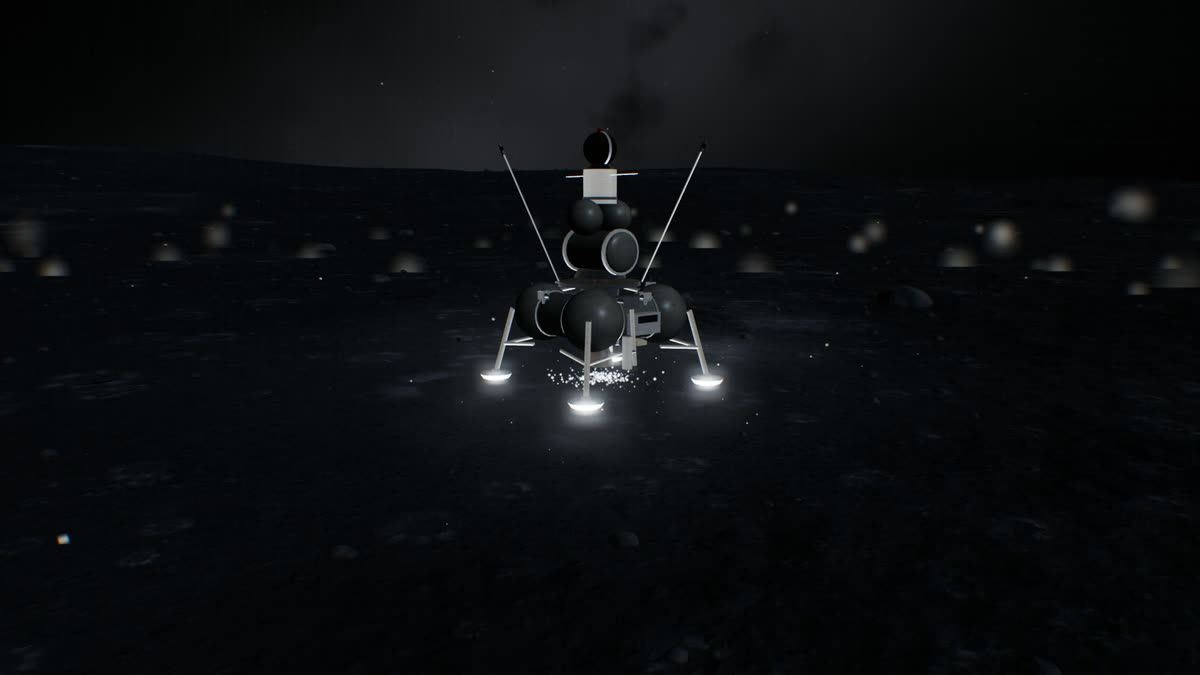
Luna 16, 1970 — a robot lands in the dark to bring Moon soil home. Level 3 of Gravity Approach is a night landing, flown on the radar altitude and the speeds.
Play Luna 16 — free, in the browser
The mission at a glance
- Country
- Soviet Union
- Landing
- 20 September 1970
- Site
- Sea of Fecundity
- Sample returned
- 101 g of lunar soil
- Mass on the Moon
- about 1,880 kg, return rocket included
- In the game
- Moon, level 3
What happened in 1970
On 20 September 1970, the Soviet probe Luna 16 landed in the Sea of Fecundity, drilled the soil and sent back 101 g of regolith to Earth: the first automatic sample return.
It came down in the lunar night: the Sun had set some 60 hours earlier. The main engine cut off about 20 m above the ground, two small engines took over and stopped 2 m up, and the probe dropped the last metres.
The level in Gravity Approach
A night landing, as in 1970. Only the Earth, a crescent low in the west, lights the plain very faintly.
The descent is near vertical, onto a small zone with scattered boulders, and the game shows where Luna 16 cut its main engine.
What the game changes
The landing lights are a help of the game (the sources consulted mention none on the probe): a short beam ahead and two wide floodlights on the sides show the ground in the last tens of metres. Luna 16’s main engine and its two small final-descent engines are merged into one throttleable engine.
How to land Luna 16
- Switch the landing lights on: without them the ground is almost invisible.
- Fly on the instruments: the radar altitude and the vertical speed tell you more than the view.
- Come down vertically. Any drift is hard to see at night, so check the horizontal speed often.
- In the last tens of metres, the lights show the boulders: move off them before you settle.
Play Luna 16 — free, in the browser
The real Luna 16
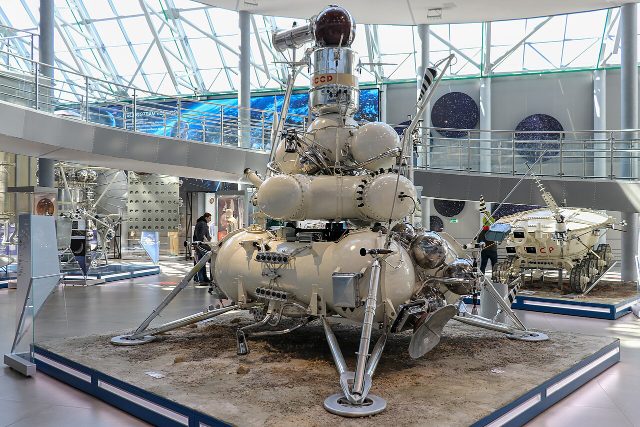
Stolbovsky, CC BY 4.0, via Wikimedia Commons

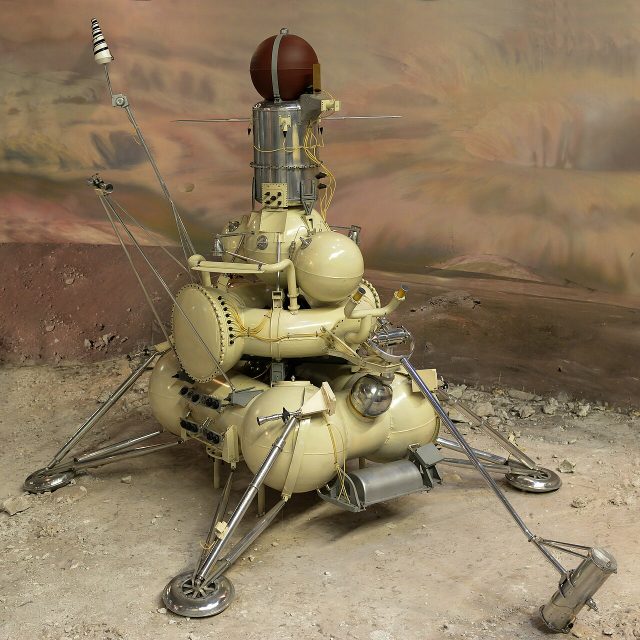
Bembmv, CC BY-SA 3.0, via Wikimedia Commons

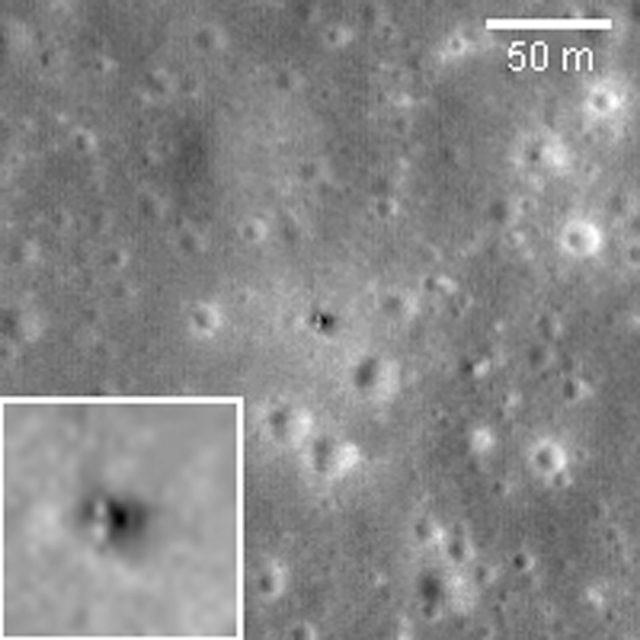
NASA / GSFC / Arizona State University, Public domain, via Wikimedia Commons
