Apollo 11: fly Eagle to the Sea of Tranquility
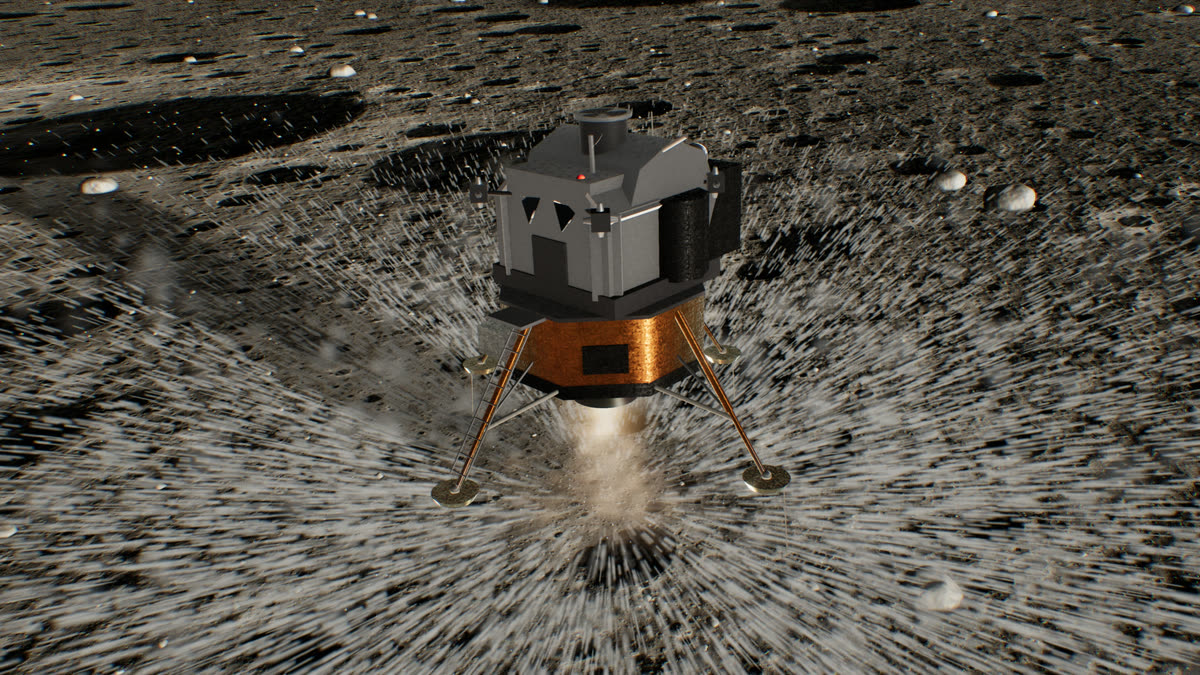
Apollo 11, 1969 — the first crewed landing, flown by hand over a boulder field. Level 2 of Gravity Approach puts you in Neil Armstrong’s seat for the last 500 metres.
Play Apollo 11 — free, in the browser
The mission at a glance
- Country
- United States (NASA)
- Launch
- 16 July 1969, Saturn V
- Landing
- 20 July 1969
- Site
- Sea of Tranquility, 0.674° N, 23.473° E
- Crew in the lunar module
- Neil Armstrong, Buzz Aldrin
- Descent engine
- 45,040 N, throttleable from 10 to 60 %
- In the game
- Moon, level 2
What happened in 1969
On 20 July 1969, Neil Armstrong and Buzz Aldrin landed the lunar module Eagle in the Sea of Tranquility.
The guidance was taking them into a crater ringed with boulders. Armstrong took over by hand and landed farther on, with very little propellant left: about 770 pounds of descent propellant remained at touchdown.
On the way down, the computer raised the 1202 and 1201 program alarms. They meant an overloaded computer, not a fuel problem, and the landing went on.
The level in Gravity Approach
The level flies the automatic approach towards West crater and its boulders, then gives you the controls, as Armstrong took them.
You hear the 1202 and 1201 alarms, the “60 seconds” and “30 seconds” fuel calls and the contact light.
What the game changes
The level starts about 500 m up and squeezes the alarms together. Its full throttle is the top of the real engine’s throttleable range (60 %); the fixed full-thrust setting, only used to brake higher up, is left out.
How to land Apollo 11
- Do not follow the guidance into the boulders: look for flat ground beyond the crater before you commit.
- A heavy lander answers slowly. Start every correction early and keep it small.
- Kill the horizontal drift with the RCS before the last tens of metres, then settle straight down.
- The fuel calls are real deadlines: when “30 seconds” comes, stop looking and land.
Play Apollo 11 — free, in the browser
The real Apollo 11
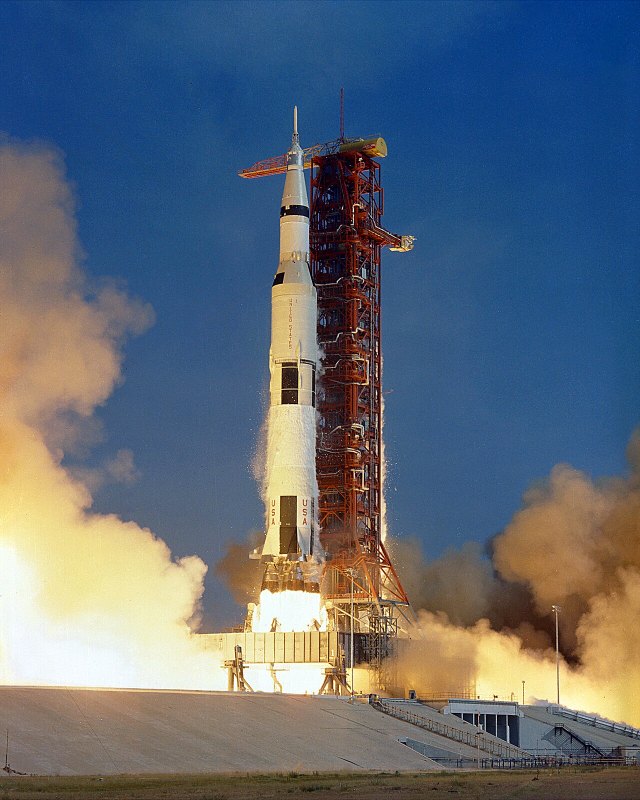
NASA, Public domain, via Wikimedia Commons

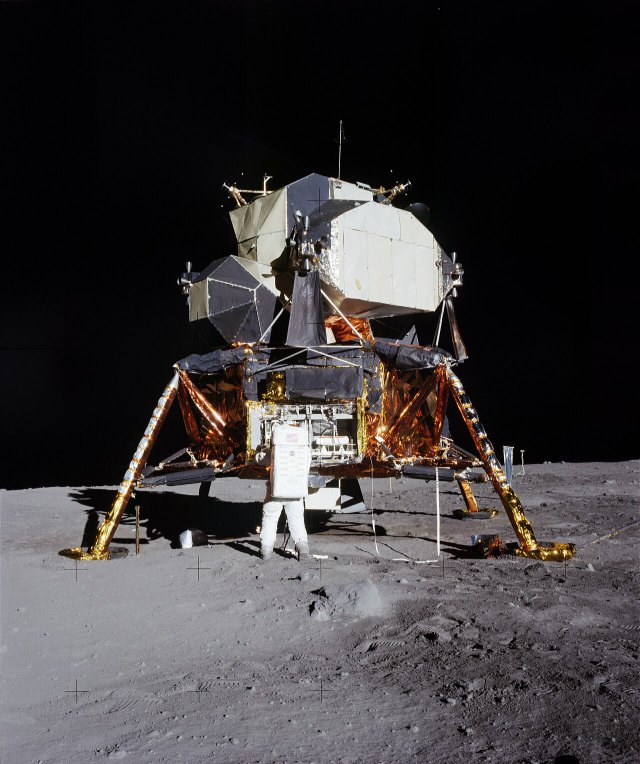
NASA / Neil Armstrong, Public domain, via Wikimedia Commons

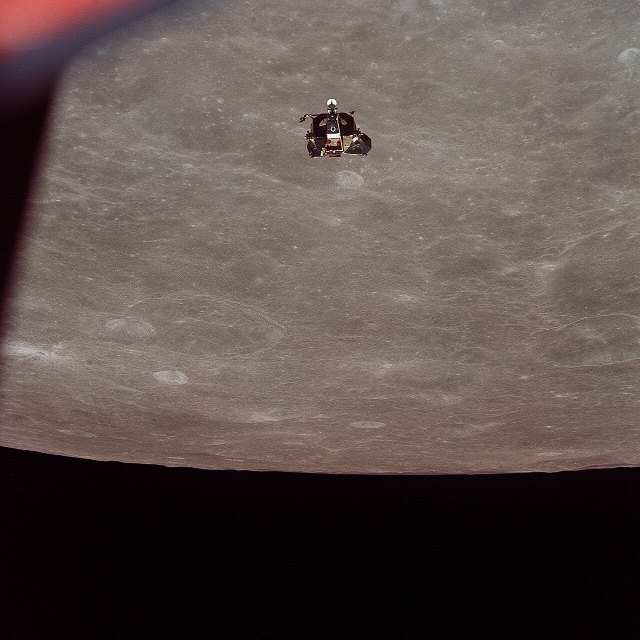
NASA / Michael Collins, Public domain, via Wikimedia Commons
