Chang’e 4: land on the far side of the Moon
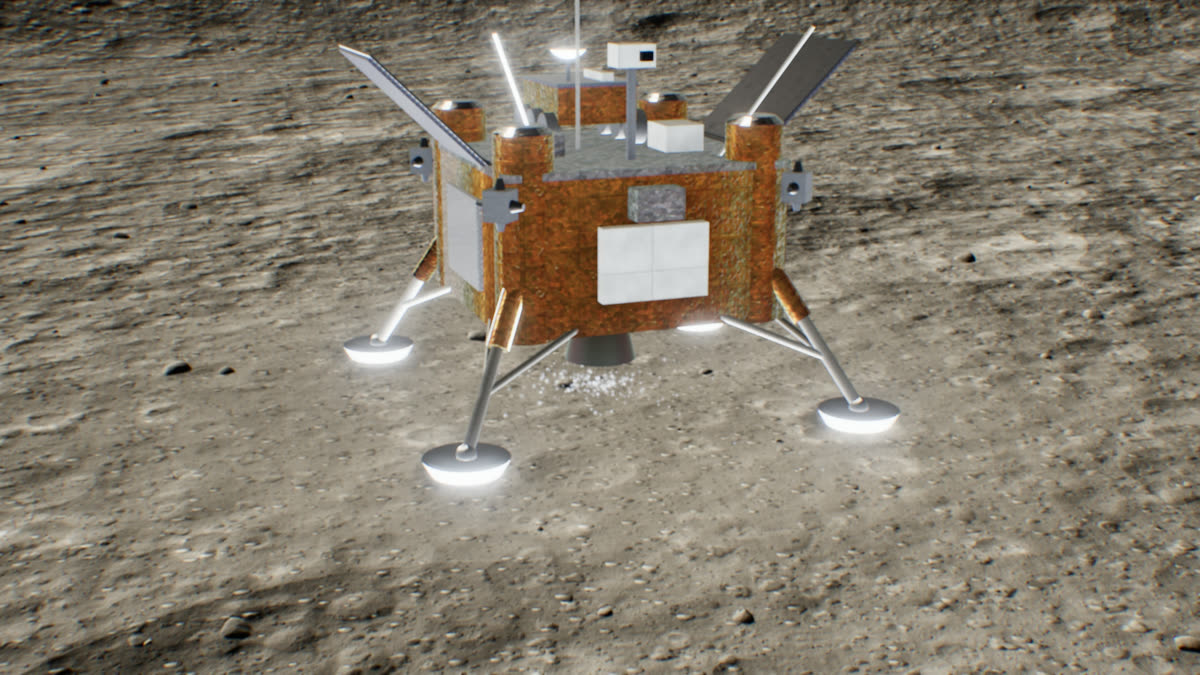
Chang’e 4, 2019 — the first landing on the far side. In level 4 of Gravity Approach your commands go through the Queqiao relay: they arrive 0.3 s late.
Play Chang’e 4 — free, in the browser
The mission at a glance
- Country
- China (CNSA)
- Landing
- 3 January 2019
- Site
- Von Kármán crater, far side of the Moon
- Rover
- Yutu-2, rolled off about 12 hours later
- Main engine
- 7,500 N, throttleable
- In the game
- Moon, level 4
What happened in 2019
On 3 January 2019, the Chinese probe Chang’e 4 made the first soft landing on the far side of the Moon, in Von Kármán crater.
The far side never sees the Earth: everything went through the Queqiao relay satellite, beyond the Moon. The rover Yutu-2 rolled off about 12 hours later.
The lander came down almost vertically, hovered about 13 seconds at 100 m to pick a spot clear of obstacles, then settled slowly.
The level in Gravity Approach
Rough ground all around, and a hover at 100 m to look for a clear spot, as the real lander did.
There is no Earth in the sky, as on the real far side.
What the game changes
The floor of Von Kármán is a plain 186 km wide: the deep crater you land in is a game stylisation of the relief around it. The real descent was autonomous; the 0.3 s delay on your commands only stands for the relay.
How to land Chang’e 4
- Every input lands 0.3 s late: make small corrections and wait to see their effect before adding more.
- Stop at about 100 m and hover, as Chang’e 4 did, to choose a clear spot.
- Descend slowly in the last metres: with the delay, a fast approach is hard to stop in time.
Play Chang’e 4 — free, in the browser
The real Chang’e 4
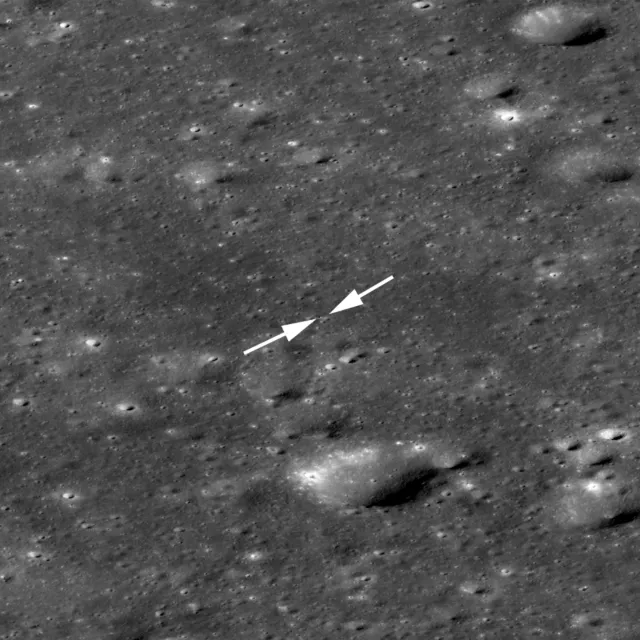
NASA / GSFC / Arizona State University, Public domain, via Wikimedia Commons

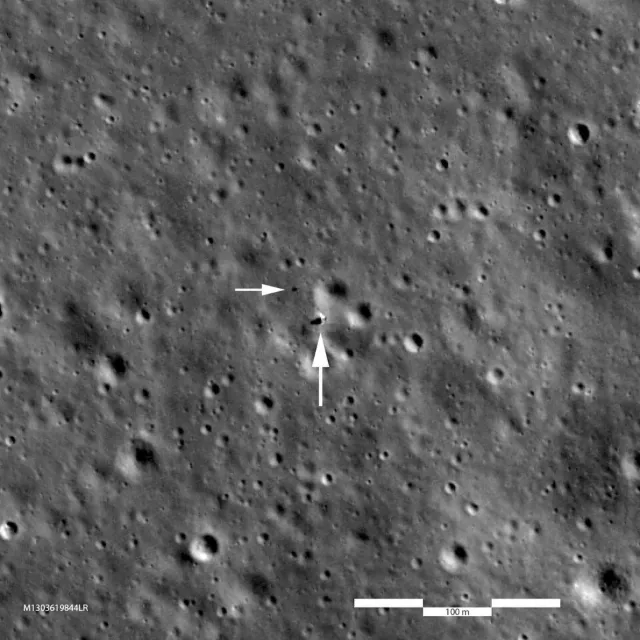
NASA Goddard Space Flight Center / Arizona State University, Public domain, via Wikimedia Commons

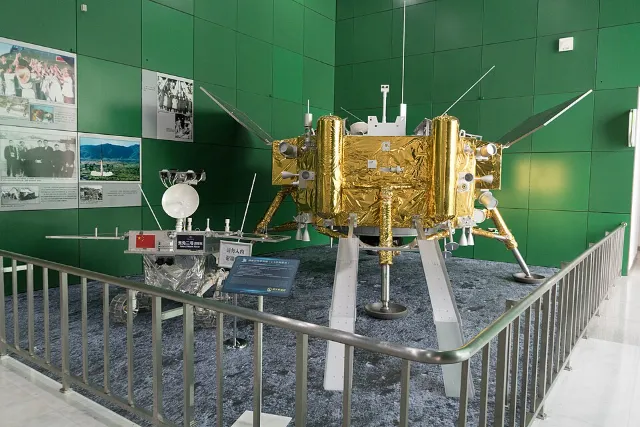
Shujianyang, CC BY-SA 4.0, via Wikimedia Commons
