SLIM: a pinpoint landing on a crater slope
SLIM, 2024 — land within 100 m on a crater slope; at 3 m the probe cuts its engine, tilts and lies down on its belly. It is level 5, the last Moon level of Gravity Approach.
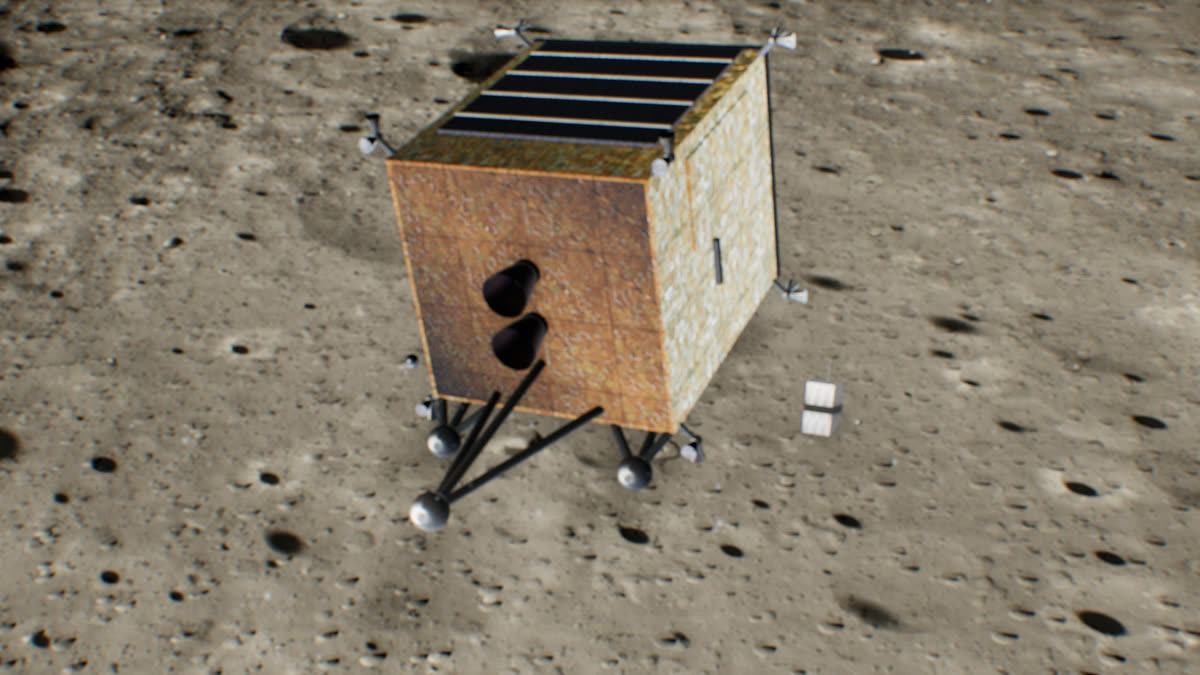
Play SLIM — free, in the browser
The mission at a glance
- Country
- Japan (JAXA)
- Launch
- 7 September 2023 (Japan time), H-IIA
- Landing
- 19 January 2024
- Site
- Near Shioli crater, about 55 m from its target
- Rovers
- LEV-1 and LEV-2
- In the game
- Moon, level 5
What happened in 2024
On 19 January 2024, JAXA’s SLIM landed near Shioli crater, about 55 m from its target, after a descent that had been accurate to a few metres. The aim was to land within 100 m instead of several kilometres.
Japan became the fifth country to land softly on the Moon.
One of its two main engines was lost at about 50 m. SLIM came to rest upside down, its solar cells facing west, and still woke up after several lunar nights.
The level in Gravity Approach
A 100 m target on the sloping flank of a crater, with boulders and steeper ground around it, and the loss of a main engine at about 50 m.
At about 3 m SLIM cuts its main engine, drops its two small rovers, touches down on one leg, then tips forward and lies on its belly along the slope.
What the game changes
The game rewards the landing that was planned, not the one that happened.
How to land SLIM
- The target is small: line up on it high up, while corrections are still cheap.
- Expect the engine loss near 50 m and be ready to steady the probe straight away.
- Arrive with the belly uphill: the cut-off and the tilt at 3 m are automatic.
Play SLIM — free, in the browser
The real SLIM

G4qg, CC BY-SA 4.0, via Wikimedia Commons

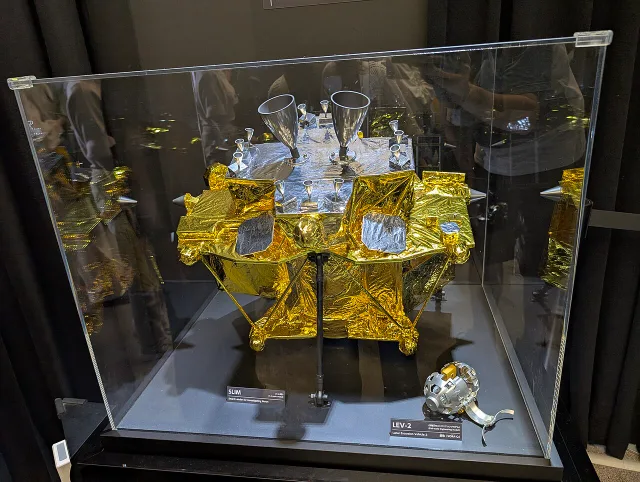
Artem.G, CC BY 4.0, via Wikimedia Commons

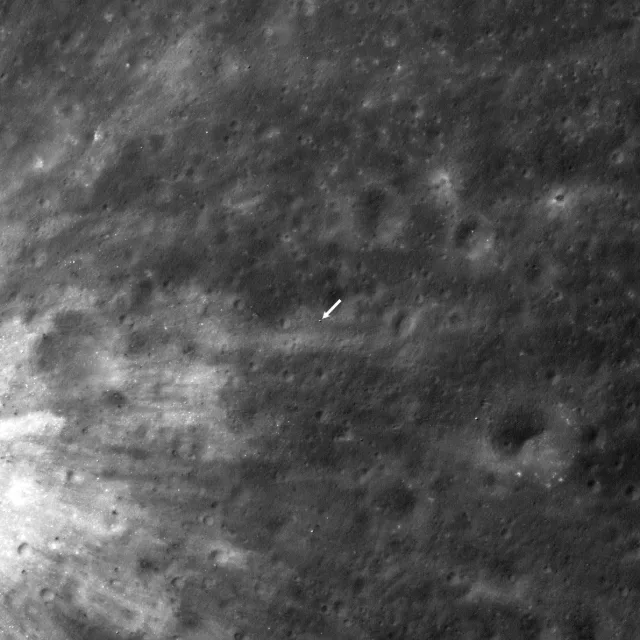
NASA / GSFC / Arizona State University, Public domain, via Wikimedia Commons
